
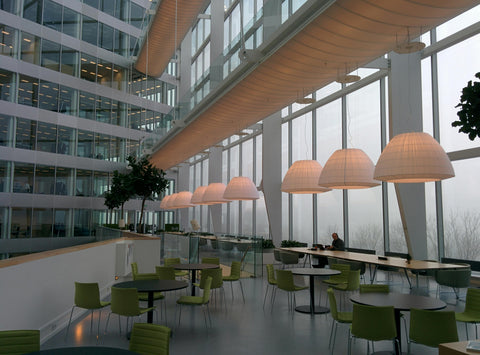
Most workplaces don't struggle because of the people in them. They struggle because the space isn't actually designed to support how those people work day to day. Background noise nobody addressed, a layout that hasn't changed since the team doubled in size, seating that looks fine in a render but isn't comfortable past lunchtime. None of these show up on a balance sheet, but they quietly drag on focus and collaboration every single day, and it often takes organisations months or years to identify what's actually holding the space back.
Across offices, education environments and government facilities in Adelaide and South Australia, furniture has stopped being something that just fills a room. It's shaping behaviour, wellbeing and how efficiently a space actually functions, whether anyone consciously notices it or not.
Furniture is the silent influencer of how a space actually performs
People rarely connect their afternoon energy slump to the chair they're sitting in, or their inability to concentrate to the open layout around them, but the connection is real. Well chosen commercial furniture encourages collaboration without bleeding into someone else's focused work, supports different working styles across a team, and reduces the physical fatigue that builds up over a normal working day. Poorly chosen furniture does the opposite, creating friction through awkward layouts and small distractions that compound without anyone clocking exactly why.
Flexibility stopped being a nice to have
Teams grow and shrink, hybrid work keeps reshaping how often people are actually in the office, technology changes faster than most fitout cycles. Static furniture struggles to keep pace with any of that, which is why a lot of organisations end up paying for a costly refit two years after the original fitout, simply because the layout couldn't adapt. Modular and reconfigurable furniture means a space can be rearranged for collaboration, focus or training without a major disruption, which matters enormously in education and government environments where the same room often needs to serve teaching, meetings and community use across a single day.
Functionality is what determines whether a space actually performs
A space can look genuinely impressive in photos and still perform poorly if the furniture inside it doesn't support how people use it. Height adjustable desks, ergonomic seating, modular lounges and properly planned workstations exist to support posture, accessibility, comfort across different users and long periods of focused work. When furniture is chosen around the people using a space rather than purely around how it photographs, the space doesn't just look better, it actually works better.
Acoustics is the problem most fitouts notice too late
Noise is one of the most common, and most overlooked, challenges in open plan offices, classrooms and shared environments. Acoustic furniture and panels reduce ambient noise, improve speech clarity and create genuine pockets for focused work within an otherwise open space. The organisations getting this right are building acoustic thinking into the original furniture and space plan, rather than treating it as a retrofit once people start complaining.
Furniture is a long-term investment, not a one-off purchase
Treating commercial furniture as a strategic decision rather than a short-term purchase changes the calculation. Durable, adaptable furniture reduces ongoing replacement costs, workplace downtime and environmental impact, and more importantly, it keeps performing as an organisation's needs shift over time. For businesses, schools and government organisations across Adelaide, that's the actual return on a furniture decision, not how it looks on day one, but how well it's still working in year five.

Common Questions
How does furniture actually affect productivity if people aren't consciously noticing it?
Most of the effect is cumulative rather than dramatic. A chair that's slightly uncomfortable, a layout that forces awkward movement, background noise that never gets addressed, none of these stop someone working outright, but they add up across a day and a week in ways that are hard to trace back to a single cause. That's part of why furniture issues often go unidentified for months or years.
Why is acoustic treatment often the thing that gets missed in a fitout?
Because the problem usually only becomes obvious after people are actually working in the space. Visual design choices get scrutinised heavily during planning, acoustic performance is harder to picture in advance, so it frequently gets addressed reactively once staff or students start raising it, rather than being part of the original brief.
Is modular furniture worth the extra cost compared to fixed layouts?
For any space likely to change function or team size within a few years, generally yes. The cost comparison shouldn't be modular versus fixed on day one, it should be modular now versus a full refit later. Government and education environments in particular tend to need that flexibility sooner than expected.
What does "furniture as a long-term investment" actually mean in practice?
It means evaluating furniture on durability, adaptability and lifecycle cost rather than just the upfront price. Furniture that holds up and can be reconfigured as needs change reduces replacement costs and downtime over time, which matters more for organisations planning years ahead rather than just furnishing for the day the fitout opens.

Final thought
The best-designed spaces don't draw attention to themselves. They simply support the people in them, quietly, effectively, every day. Creative Systems works with businesses, schools and government organisations across Adelaide and South Australia to choose furniture with that purpose in mind.